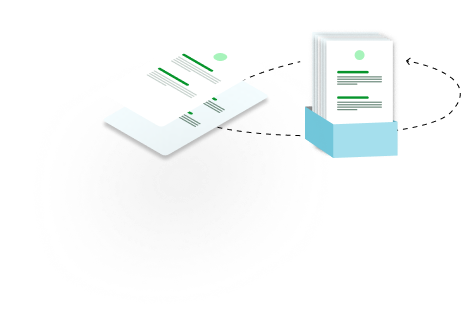
It might not be common knowledge that spending quality time designing the perfect survey, having clear questions, balanced scales, and clean logic flows, is not a deterrent to translation bias in multilingual surveys. With multilingual surveys, the questions and responses need to be translated into different languages for wider reach, which often results in clean data becoming a tangled web difficult to unravel after translation, even among seasoned researchers.
Translation bias is one of the salient threats to multilingual survey efforts can quickly distort valid findings, mislead stakeholders, and lead to costly decisions because the data you got, had a different meaning from your original result.
Whether you’re administering a global customer satisfaction study, an international market research study, or just a cross-cultural employee survey. This guide breaks down all you need to know about translation bias and how to stop it in its tracks before it ruins your research.
What Translation Bias Means in Multilingual Surveys
Translation bias in surveys is a systematic error that occurs when survey content is translated into another language which affects how questions are framed and responses are recieved. The crucial word here is systematic. While random errors in translation can be tasking. Systematic errors are almost lethal. It can skew a perfectly coherent response into inaccurate data connoting something different from the original intention.
Translation bias isn’t just about wrongly translated words, but also about context, cultural meanings, assumptions, and the like. A question that is appropriate in English may mean something different in another language, not just in words alone but in meaning, tone, implied assumptions, grammatical structure, and cultural context. A question that is perfectly appropriate in English may have a negative or implied connotation in Dutch, Arabic, or Mandarin.
At its core, translation bias threatens the concept researchers describe as measurement equivalence. This is the idea that a survey measuring the same construct would mean the same across all language groups. However, due to translation bias, equivalence is diluted or lost, rendering cross-cultural comparisons invalid.
Common Causes of Translation Bias in Survey Research
Knowing the source of translation bias is the first step in addressing it. Here are a few common causes.
-
Word-for-word (literal) translation
This is perhaps the most common culprit. Translators who use an averbatim approach in surveys, without considering localized language nuances, can often produce text that appears the same on the surface but conveys a deeper meaning that differs from the original intention or question. Languages are not symmetrical systems or jigsaw puzzles where words map neatly onto one another. Encouraging or using that kind of one-to-one correspondence always leads to distortion.
-
Lack of domain expertise among translators
Another common cause of translation bias, is a lack of domain expertise as professional translators of legal documents may translate surveys that are technically accurate yet overly formal for the survey context. In essence, survey language needs to align with the target population’s vocabulary and local language context, not just the source text.
-
Single-translator workflows
A one man team in tranlsation workflows comes with their own specific kind of risk as there is no second perspective to check for errors or ambiguous phrasing. In such instances, blind spots are overlooked and are then reflected in the final survey results.
-
Reliance on back-translation as the sole quality check
When you use one software to check a translation and another to verify its correctness can trigger translation bias. Even though the software check may catch outright errors, it could miss subtle issues such as cultural appropriateness. So even when questions are well translated it can still feel awkward or misleading to native speakers.
-
Ambiguous source questions
When the original survey question is vague and contains double-barreled items, translators in different languages will make different choices across language versions, potentially resulting in responses that differ from the original survey text.
-
Machine translation without human review
is increasingly common, as most software offers 99% translation guarantees that consider local language context. While this is great, relying solely on machine translation without a human review is a recipe for full-fledged translation bias.
How Language Nuances Affect Survey Responses
Language is not one-size-fits-all for meaning. Specific words, sentence structures, and phrases in a language actively affect how respondents contextualize meaning, process questions, and prepare responses. Therefore, any variances in responses can be mistaken for genuine behavioral differences between populations.
How Language Nuances Affect Survey Responses
Language is not a one-size-fits-all tool for conveying meaning. The choice of particular words, grammatical constructions, and expressions in a language directly determine how people interpret meanings, understand questions, and get ready to give answers. So, differences in answers can be wrongly attributed to real behavioral disparities among populations.
Formality and register influence how deeply an individual psychologically gets involved with a question. For instance, French and German are languages where one can address the second person with either a formal or an informal pronoun. This means that a wrong register choice can alter your interview perception and This way change your behavior to response.
It is very difficult to translate negation accurately. That means, a double negative that is totally reasonable in one language can be very confusing in another one, and Because of this change the meaning of a question so much that the respondent ends up giving the answer opposite to the survey question’s meaning.
Tense and aspect of a verb express meaning that can be difficult to communicate perfectly in translation. Take, for example, the difference between “I eat” and “I am eating” in English, where the distinction is clear. Yet, this differentiation can be lost when translated into other languages, which may cause inconsistencies in the translations and ultimately impact the survey outcomes.
Cultural Differences That Lead to Misinterpretation in Surveys
Translation bias and cultural bias are closely intertwined but distinct concepts. Cultural differences can lead to misinterpretation even when the translation is technically correct. In other words, getting the words right is inadequate if the underlying concept doesn’t translate.
-
Acquiescence bias
Acquiescence bias is the tendency to accept statements regardless of their content, appears across cultures and is shaped by social norms around harmony, respect and conflict avoidance. Populations in certain regions have higher acquiescence tendencies in survey data. This means that a “yes” or “agree” in a survey response is not necessarily a uniform response. In such cases, if your survey relies heavily on agree/disagree responses, this cultural variation can mask itself as a substantial difference in attitudes.
-
Social desirability bias
This also shows up differently across cultures. Questions on topics considered socially stigmatizing or that touch on norms of politeness and the like will elicit different responses in some cultural contexts more than in others.
-
Conceptual non-equivalence
This occurs when a term or concept exists in one culture but makes no meaningful impact in another. For instance, abstract concepts such as stress, self-esteem, midlife crisis, and life satisfaction may not translate easily into equivalent subjective experiences in other cultural contexts. Translating the word is easy, but ensuring that respondents across different contexts translate or interpret the underlying construct in the same way is a bit more complex.
-
Numeric scale interpretation
Research has repeatedly shown that respondents from different countries adopt the extreme ends of rating scales differently. While some cultures favor the middle, others prefer the extremes. The extreme response style indicates that the average scores and standard deviations on Likert scales can vary across different languages in ways that reflect only cultural differences rather than genuine differences related to the survey research.
-
Reference group effects
This introduces another layer of cultural complexity. When respondents are asked questions such as “How satisfied are you with your quality of life/family/income?”, their responses are typically relative to their reference group. So, satisfaction in a cultural group is relative to another group in high-income urban areas.
How to Detect Translation Issues in Multilingual Surveys
The challenge with translation bias is that it is invisible in your final data unless you specifically design to detect it. By the time you notice that your French respondents consistently score lower on every dimension than your German respondents, you have no way of knowing whether that reflects real differences or a translation problem unless you incorporate a built-in detection mechanism from the start.
- Cognitive interviewing is the gold standard for early detection. This involves asking a small sample of native speakers to complete the translated survey via verbal responses, sharing their thought process as they answer each question. This method includes probing questions that show whether respondents are interpreting the questions accurately.
- Psychometric equivalence testing, specifically confirmatory factor analysis (CFA) and tests of measurement invariance, helps researchers statistically test whether translated survey versions assess similar underlying constructs. Measurement invariance tests can determine whether factor loadings, item intercepts, and latent variances are similar across language groups. When they are not, it indicates that certain items may function differently across versions.
- Piloting with bilingual respondents is an underrated yet highly practical method for detection. Bilingual individuals who can respond to surveys in both the source and target language provide a balanced natural within-person comparison. Systematic differences in the way bilingual respondents answer the same questions across language versions point directly to problem items.
- Comparing item difficulty statistics and scale intercepts across language groups can uncover translation-related calibration problems. If an item that should be moderately difficult to endorse in one language becomes very easy to endorse in a translation, this indicates that the shift is a detection signal worth investigating.
Best Practices for Translating Survey Questions Accurately
Preventing translation bias is significantly more efficient than detecting it nd making corrections afterward. Therefore, incorporating rigorous translation practices from the start of your survey development process dramatically minimizes the risk of translation bias.
- Use the TRAPD model(Translation, Review, Adjudication, Pretesting, Documentation):
Rather than treating translation as a single-step task, TRAPD approaches it as a multi-stage process. The first step is to have two independent translators produce separate versions; then a review team compares and matches the versions; an adjudicator fixes any variances, and the final version is tested with real respondents. At the same time, this method is more task- and resource-intensive than single-translation workflows. It is ideal for research where cross-cultural comparability matters; the investment is essential.
- Simplify the source instrument before translation begins:
Complex sentence structures, idiomatic expressions, metaphors, similes, double-barreled questions, and ambiguous terms all make cross-language translation a Herculean task, so simplifying the question in the source language before translating is very helpful in preventing translation issues.
- Use forward-backward translation with independent translators:
Here, the original language is translated into the target language by one translator (forward). Another translator, who hasn’t seen the original, translates that version back into the source language (backward). Comparing the original and back-translated versions reveals areas of distortion. Crucially, this process works best when the backward translator is not shown the original and when differences are treated as starting points for revision rather than as a pass/fail criterion.
- Engage native speakers who understand the research domain:
Translators working on survey research need to combine linguistic fluency with an in-depth understanding of survey methodology, the survey’s subject matter, and the target respondent population. A translator fluent in the target language but unfamiliar with psychological measurement scales, for example, may present technically accurate translations that still include construct-level distortion.
- Adapt rather than translate where necessary:
Some items simply cannot be translated equally because of their specific underlying concepts. In such instances, cultural adaptation is ideal. Here, rather than translating, you create a culturally appropriate version of the concept you are evaluating. This works better, but it requires close collaboration between linguists and subject-matter experts to succeed.
How to Test Multilingual Surveys Before Full Distribution
Testing your multilingual survey before launching it to the entire audience is very important and investing in pre-deployment testing is one of the highest-ROI activities in administering multilingual survey research. Problems found in testing are cheaper to fix than problems discovered after data collection is complete.
Here is the proper way to do it:
cognitive interviews.
Get about five to ten native speakers per language who actually represent your target population about age, education, and expertise. Ask them to do the survey while you observe, and also listen to the comments the make on the questions. You will learn really fast if any words are not translated well, if someone is confused about what or when you are asking, if the wording just doesn’t work. Note all the problems you see and correct them before going on.
conduct a pilot test.
Your target is 50 to 100 people for each language group. This will provide you with enough information to perform analyses like item-total correlations and checking alpha reliabilities. The main purpose here is to find out if some questions simply don’t work the same way in different languages or if a particular translation changes the scale in a negative way. Here, what you are mainly looking for are problem areas – for example questions that have a different meaning in another language or results that are not quite consistent.
Test the full survey experience, not just the questions:
Don’t limit test to the survey questions alone as Translation errors can occur anywhere: instructions, error messages, progress indicators, even the very last thank-you page. Carry out the whole survey procedure in each language and verify everything again. Some wording will be a lot lengthier in one language, which can spoil your nice response layout – so watch out for display problems as well.
Check logical flow and skip patterns across versions
Verify your survey’s logic and flow. If you have intricate skipping patterns, piped-in answers, or conditional phrases, it is necessary for you to test these aspects in each language. Occasionally, longer or shorter pieces affect the logic, or different grammar rules lead to mistakes. Do a run-through of all the possible paths for each language until
Conclusion
Translation bias really undermines your data by robbing you of the ability to trust it.
Without it, a multilingual survey is one of the most potent research tools a real insight into how people in different parts of the world think, feel, and act. With it, the same survey turns into a systematic misunderstanding, backed by numbers and sample sizes that seem convincing.
The positive aspect is that translation bias can be avoided. Not by one single method, but by recognizing translation as a serious methodological task worthy of the same level of rigor as you would apply to questionnaire design, sampling, or statistical analysis. In practice, that involves simplifying your source instrument before it is translated. Employing well-structured, multi-stage translation techniques. Getting real respondents to participate in testing every language version. Confirming measurement equivalence before making comparative statements.
Those researchers who succeed here are not necessarily the ones with the biggest budgets. They are the ones who stopped thinking of translation as an afterthought and started considering it as a part of the research itself.
Because ultimately your survey is not what you wrote in English. It’s what every respondent read in their own language. Ensure they mean the same thing.
 By Angela Kayode-Sanni
| Last updated:
Jun 21
|
12 min read
By Angela Kayode-Sanni
| Last updated:
Jun 21
|
12 min read